
From Ego to Vision: Redefining Your Photography in the Digital Age

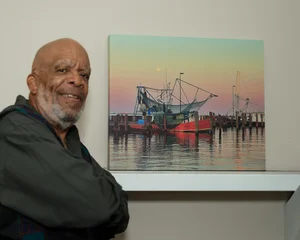
60 and Fabulous
The Invisible Force Behind Your Lens
Every photographer talks about gear, lighting, composition, and editing. But very few talk about the one thing shaping every image you create:
Your mindset.
More specifically—whether you’re creating from an egoic mindset or from a place of clear creative vision. This isn’t abstract philosophy.
This directly affects:
What you choose to shoot
How you compose your frame
How you edit your images
How you present your work to the world
If you’ve ever struggled with finding your style, staying consistent, or feeling like your work lacks identity… this is likely the root.
The Ego Behind the Camera
The ego doesn’t show up loudly. It’s subtle. It disguises itself as ambition, taste, and even “professionalism.”
Here’s what it looks like in real-world photography:
1. Shooting for Approval Instead of Expression
You see a trending style:
Teal and orange color grading
Overly dramatic HDR landscapes
Perfectly staged lifestyle shots
So you replicate it—not because it speaks to you, but because it performs well. The result: technically strong images… with no soul.
2. Comparison Becomes Your Creative Director
Instead of asking:
“What do I see?”
You ask:
“What are they doing?”
Your work becomes reactive instead of intentional.
You chase likes
You mirror competitors
You second-guess your instincts
Over time, your unique perspective gets buried.
3. Over-Editing to Impress
The ego loves excess:
Too much clarity
Oversaturated colors
Unreal contrast
Because louder feels like better. But impactful photography isn’t about how much you add—it’s about what you choose to reveal.
4. Identity Tied to Performance
When your mindset is ego-driven:
A low-performing post feels like failure
A high-performing post becomes your standard
Your worth fluctuates with engagement
That’s not creativity—that’s dependency.
How This Shows Up in Your Brand
If your photography brand feels inconsistent, unclear, or forced… the ego is likely involved.
You may notice:
A mix of styles with no cohesion
A portfolio that looks trendy but not personal
Messaging that sounds like everyone else
Your brand should feel like a point of view, not a collection of experiments.
Shifting From Ego to Vision
This is where everything changes. You don’t eliminate the ego—you stop letting it lead.
1. Shoot From Observation, Not Validation
Before you press the shutter, ask: “What am I drawn to—and why?” Not what will perform. Not what’s popular. But what genuinely captures your attention. That’s where your style begins.
2. Develop a Consistent Visual Language
Instead of chasing variety, refine your perspective:
Do you lean toward contrast or softness?
Minimalism or complexity?
Stillness or motion?
Consistency isn’t limitation—it’s identity.
3. Edit With Restraint and Intention
Every adjustment should answer one question: “Does this support the story of the image?” If not, remove it. Strong editing is not about adding—it’s about refining.
4. Present With Purpose
Your website, Instagram, and print shop should feel unified.
Not like:
Random uploads
Trend experiments
Mixed visual voices
But like:
A curated body of work from a clear perspective.
Your Advantage as a Photographer
Here’s the truth most people overlook: The moment you stop chasing what works…you start creating what lasts.
In a world driven by fast content and constant comparison, an
authentic perspective stands out more than perfection ever will.
A Practical Shift You Can Make Today
Next time you go out to shoot:
Ignore trends
Forget performance
Stop thinking about posting
Instead:
Slow down
Observe light, texture, and emotion
Capture what you notice—not what you think others want to see
Then edit lightly.
Present intentionally.
And let the work speak.
Closing Thought
Your photography is more than images—it’s perception. And your brand—Digital Age Travel Photography—already says it: “From my perspective… to your perception.”
The question is:
Is that perspective truly yours?
Or is it shaped by the noise of the world?
Because the moment you answer that honestly…
Your work changes. And when your work changes—everything else follows.
Available Fine Art Prints…from my Perspective…
Call To Action…
Keep Exploring. Keep Creating. Keep Seeing.
Your journey as a travel photographer is never finished. Every destination offers a new perspective, every encounter presents a new story, and every image is an opportunity to refine your vision.
Follow Digital Age Travel Photography for insights, inspiration, creative resources, photography education, and practical perspectives designed to help you elevate your craft and transform your travel photography into meaningful fine art.
Join the Digital Age Travel Photography Community
Get new articles, photography insights, creative resources, and opportunities delivered directly to your inbox.
Sign up for the Digital Age Travel Photography newsletter and stay connected to the journey.
Join the journey. Expand your vision. Create work worth remembering.
Digital Age Travel Photography
From the photographer's vision to the collector's perception